Facebook Ads for Dentists in 2026: Costs, Compliance, and Campaigns That Book Patients
A practical 2026 guide to Facebook ads for dentists: current CPL benchmarks, HIPAA-safe creative, Meta policy pitfalls, campaign structure, follow-up, and six ad concepts worth testing.
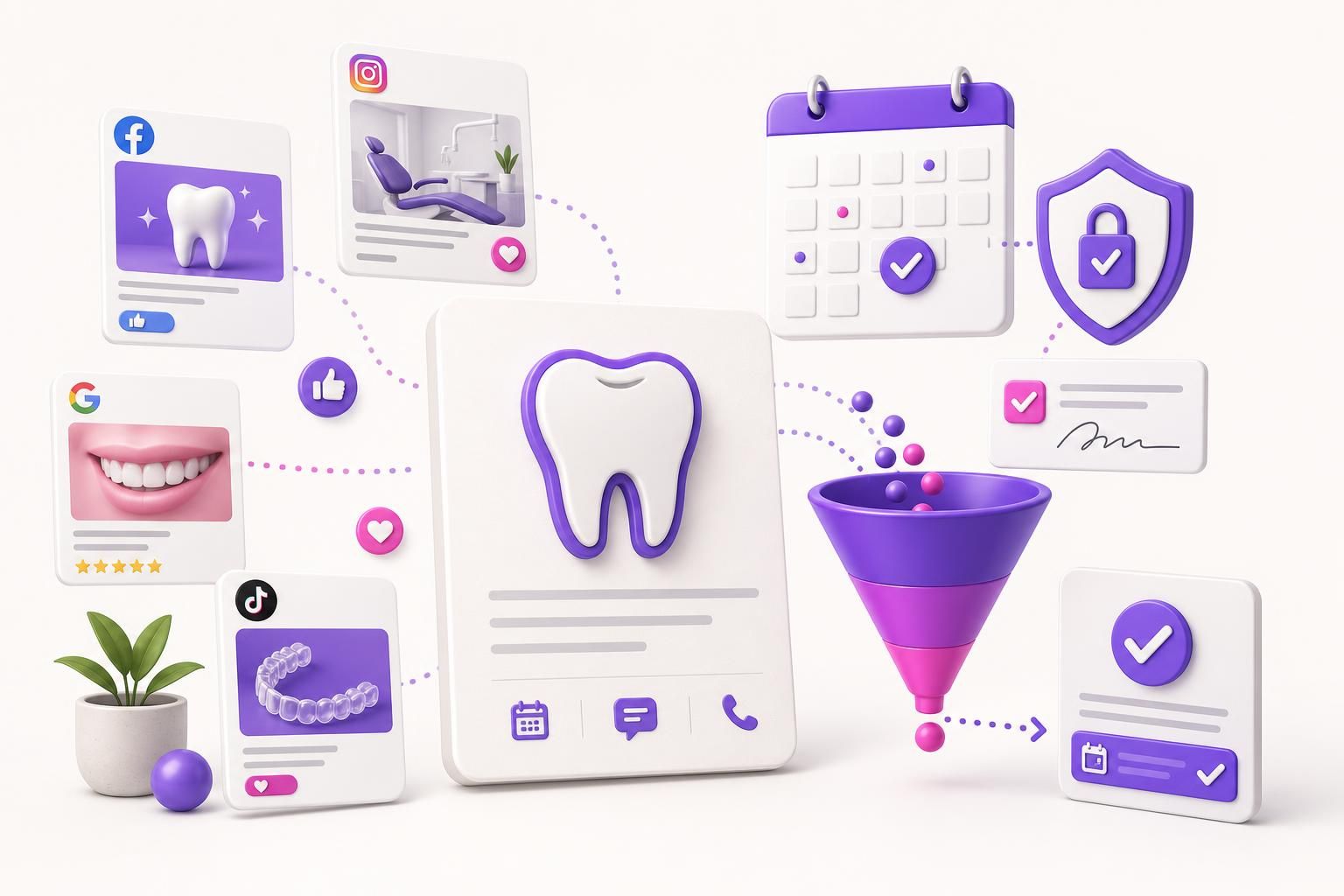
Dentists paid about $76.71 per lead on Facebook in WordStream's 2025 Meta benchmark, the highest CPL in the dataset. That number is not your target. A $25 lead who never answers the phone is expensive. A $120 implant lead who shows up and accepts treatment is cheap.
What Facebook dental leads cost in 2026
WordStream's 2025 study is the most recent broad US benchmark: 726 campaigns, a 1.05% click-through rate, a $76.71 CPL on Facebook lead campaigns. It blends implants, orthodontics, and general dentistry across every city. The raw data is in the WordStream benchmark.
| Metric | Useful starting range | What changes it |
|---|---|---|
| Lead CPL | Benchmark against $76.71 | Treatment, city, offer, form friction |
| Contact rate | Track, do not assume | Response time, phone validity, message fit |
| Booked rate | By treatment and source | Qualification, financing, staff script |
| Show rate | By appointment type | Wait time, reminders, deposits |
| Accepted-case CAC | Your true decision metric | Case value, sales process, clinical fit |
Choose one treatment, not "a dental patient"
A new-patient exam, an aligner consult, and an implant consult are different products with different urgency, case values, and objections. Combine them and you get generic creative plus a front desk that cannot tell why the caller raised a hand.
Give each campaign one job:
New-patient capacity
Promote a defined first visit and say what it includes.
High-value consults
Educate before asking for the implant, aligner, or cosmetic consult.
Emergency demand
Same-day availability and a direct call path. Forms are too slow for a toothache.
Dormant-patient reactivation
Consented first-party channels only. Not the same message as cold traffic.
The compliance layer most ad guides miss
Dental ads answer to four rulebooks: Meta's ad standards, HIPAA, the FTC, and your state dental board. This is operational guidance, not legal advice.
1. Do not assert a viewer's health condition
Meta's personal-attributes standard bans copy that points at the viewer and asserts a sensitive condition. Describe the service and the outcome instead. Enforcement shifts, so re-read the policy before every launch.
2. Treat patient identity and imagery as protected
HHS requires written authorization before a covered practice uses protected health information for marketing. A patient's photo, their story, and the bare fact that someone is your patient all count, and posting publicly does not change that. Read the HHS marketing guidance and the ADA's dental advertising guide.
3. Testimonials must be real, authorized, and representative
The FTC's Consumer Reviews and Testimonials Rule bans fake testimonials. Its business Q&A says an actor or AI avatar playing a patient can still be deceptive if viewers read it as a real customer. State dental rules are often stricter. Our testimonial ads guide shows a real patient testimonial ad with its run length, plus the consent rules for each review source.
Before-and-after photos are the highest-risk asset
Confirm written authorization, typical-result status, required disclosures, and your state board's rules first. A photo being public in a review does not make it usable.
A campaign structure small practices can actually manage
- Keep geography honest. Target the area patients actually travel from.
- Start broader than your instincts. Let the treatment message qualify the audience.
- Run three to five genuinely different concepts. A new background color is not a concept. A new problem, proof, or offer is.
- Match the conversion path to urgency. Calls for emergencies, instant forms for fast-follow-up consults, landing pages for treatments that need education.
- Send source and treatment to the front desk. Staff should know the ad promise before they dial.
Use form friction deliberately
Shorter forms produce more submissions and more junk. Ask only what the intake team will use: treatment, timing, location, contact method. Clinical detail never goes in an ad form.
Build more concepts without cloning competitors
Research local and national dental ads with AdMakeAI, pull the hook and offer structure, then generate on-brand variations. Copy the mechanism, not the patient, claim, or logo.
Six dental ad concepts worth testing
These concepts come from a July 2026 pull of the Meta Ad Library, not from a brainstorm. We scraped 167 active US ads: 40 from Aspen Dental, 40 from ClearChoice, 23 from Tend, a small set from Affordable Dentures & Implants, and 60 from keyword searches for dental implants and Invisalign.
The saturated angles are obvious once you see the volume. Aspen Dental headlines almost everything with budget: "Care fit for your budget" repeats across its creative, next to named patient stories like Jose in Jacksonville. ClearChoice attaches a free consultation to nearly every implant ad and leans on its lifetime warranty. In the keyword results, local practices mostly run award-badge collages and free-treatment giveaways.
So a free implant consult is table stakes, and "affordable" with no number is wallpaper. The six concepts below aim at the gaps the big spenders leave open. Each image is a mocked-up example creative for a fictional practice.
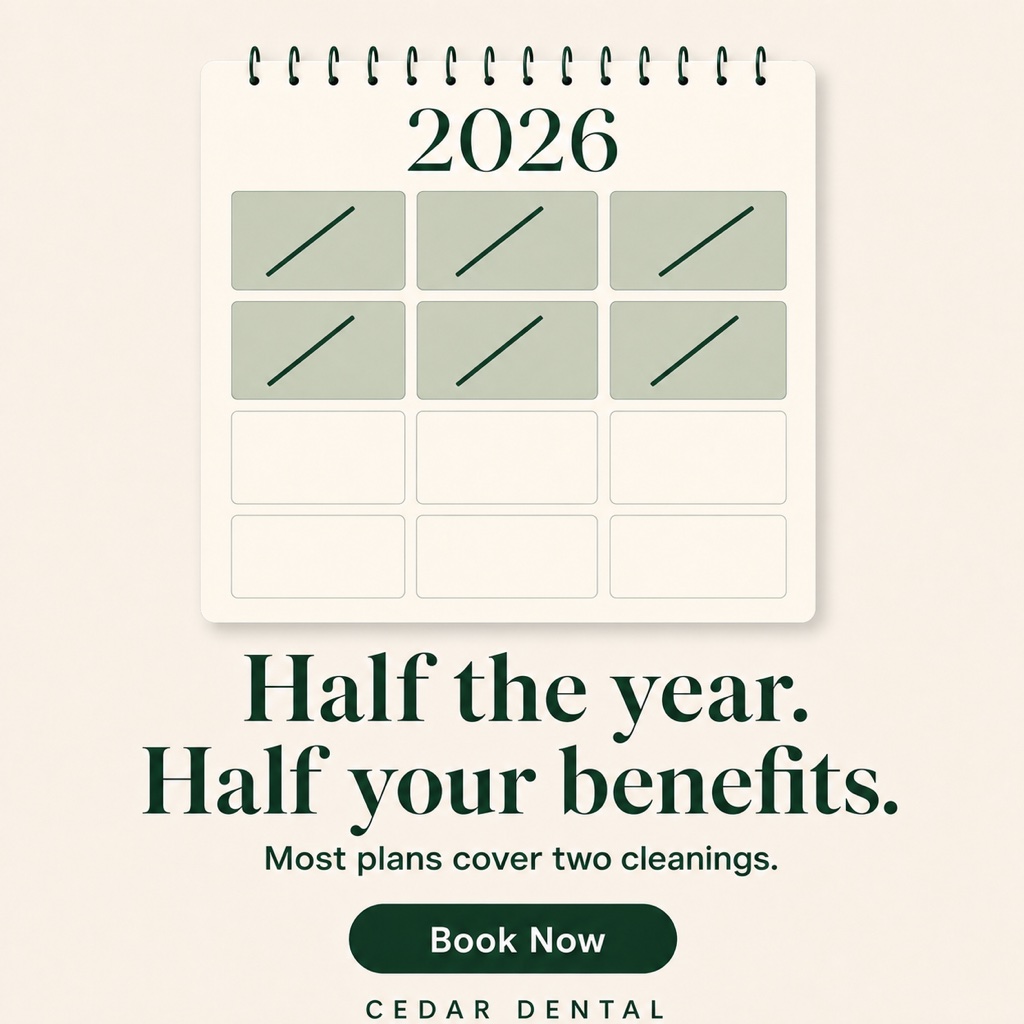
1. The mid-year benefits reminder
Tend is running "Your dental benefits are already halfway gone." as a July ad. Nobody else in our pull touches the mid-year deadline; the closest local version still leans on the January benefits reset. An insurance deadline is also the rare urgency lever that carries no health claim about the viewer.
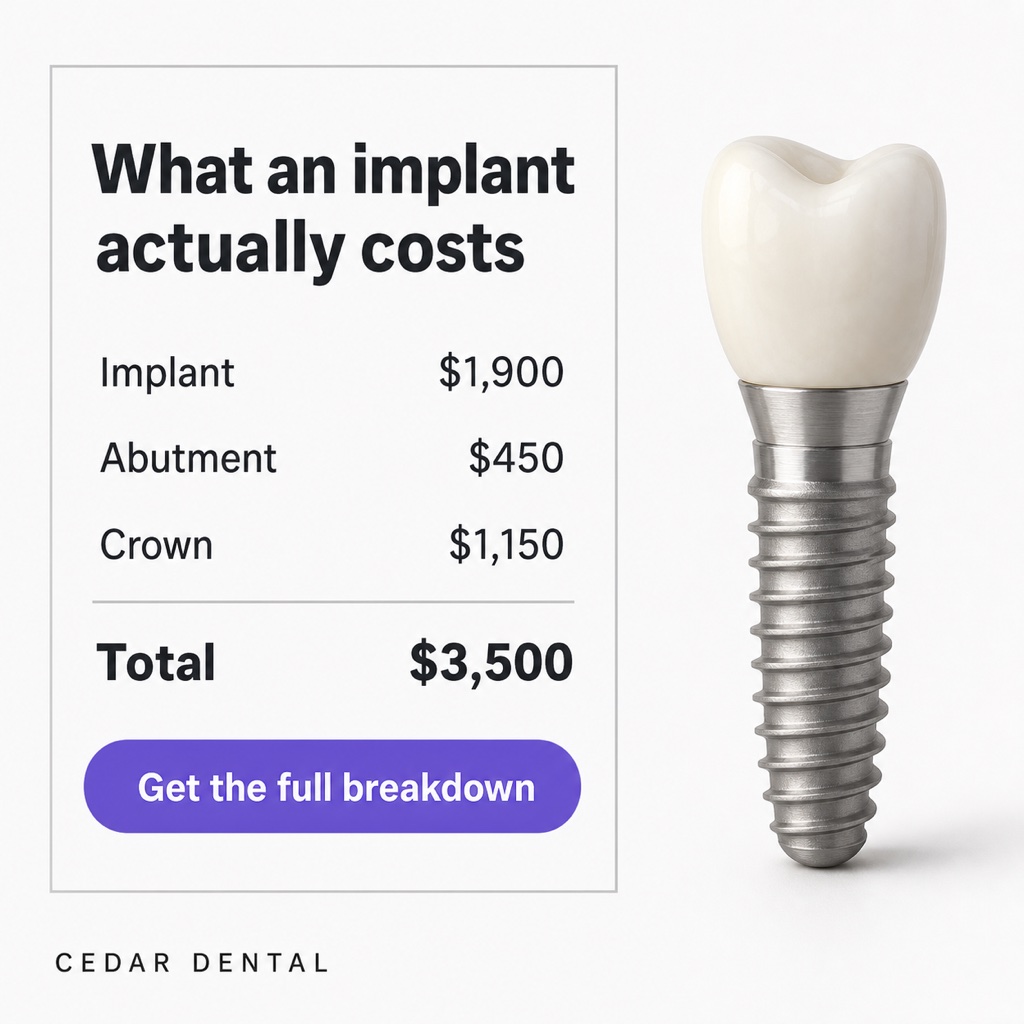
2. Publish a real price, itemized
The nationals gesture at price without digits. Aspen says affordable in nearly every card, NuSet says "Best Price. Guaranteed." The only real numbers in our dataset were Affordable Dentures' $395-per-arch cards and Turkish clinics quoting $450 implants. A local practice that itemizes the implant fee owns that gap, provided the limitations sit right next to the number.
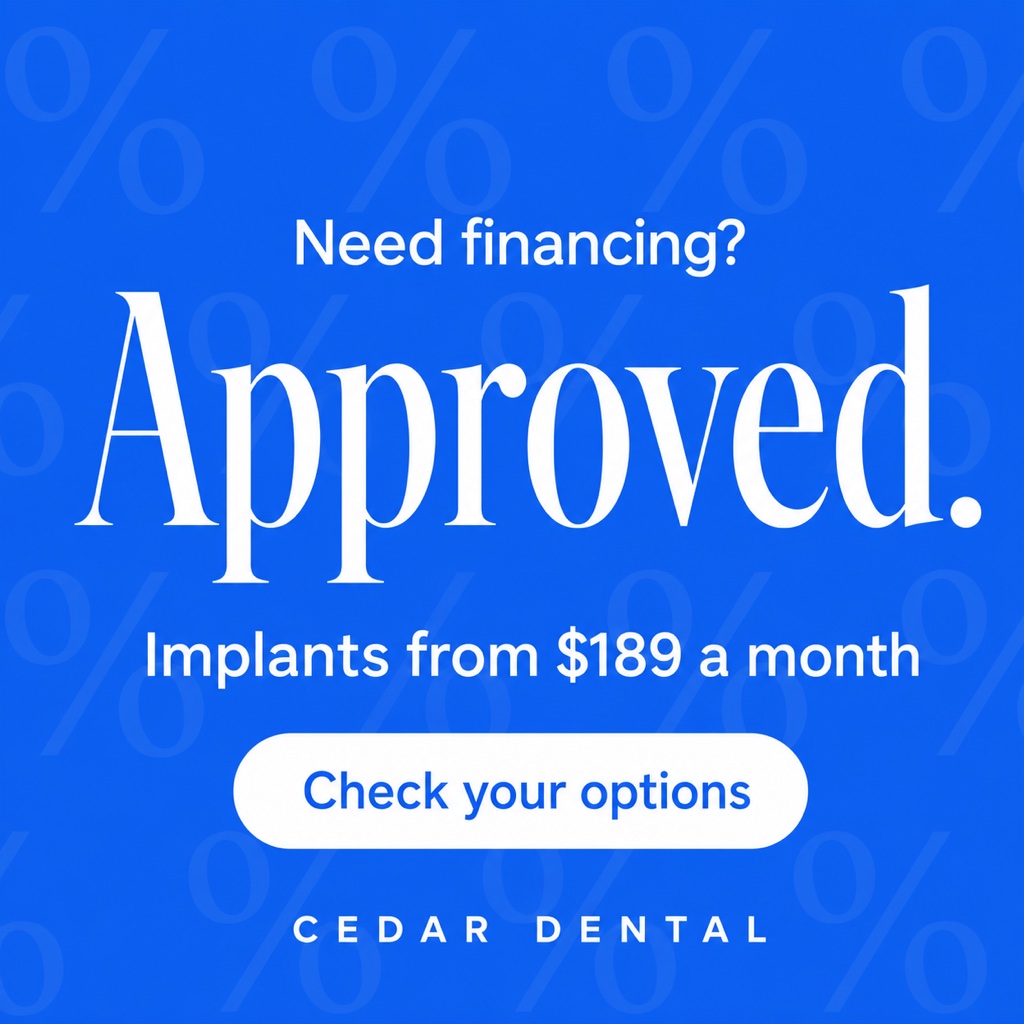
3. Lead with the financing answer
Affordable Dentures runs a flat blue card that asks "Need Financing?" and answers with a giant "Approved." plus a 99 percent approval stat. No smile photo, no procedure. Local ads mention financing in sentence four, if at all. Cost fear blocks more implant consults than clinical fear, so make the monthly number the ad. A payment line can also put the ad in Meta's financial category, as we found in home service financing ads.
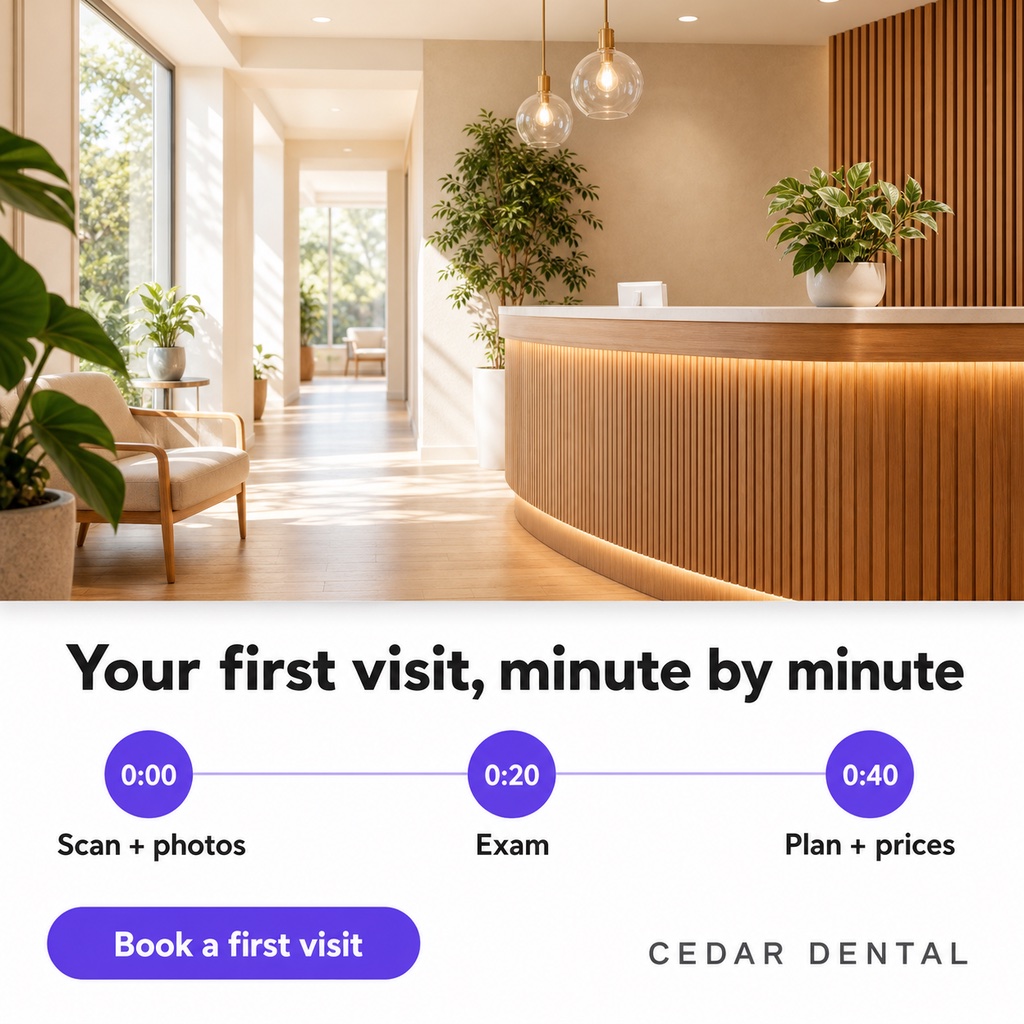
4. Map the first visit, minute by minute
Aspen runs a national video titled "See what your first visit is like." Not one local practice in our 60 keyword ads does the same, and unfamiliarity is the thing that stalls lapsed patients. Show the timeline, then end on what the visit costs.
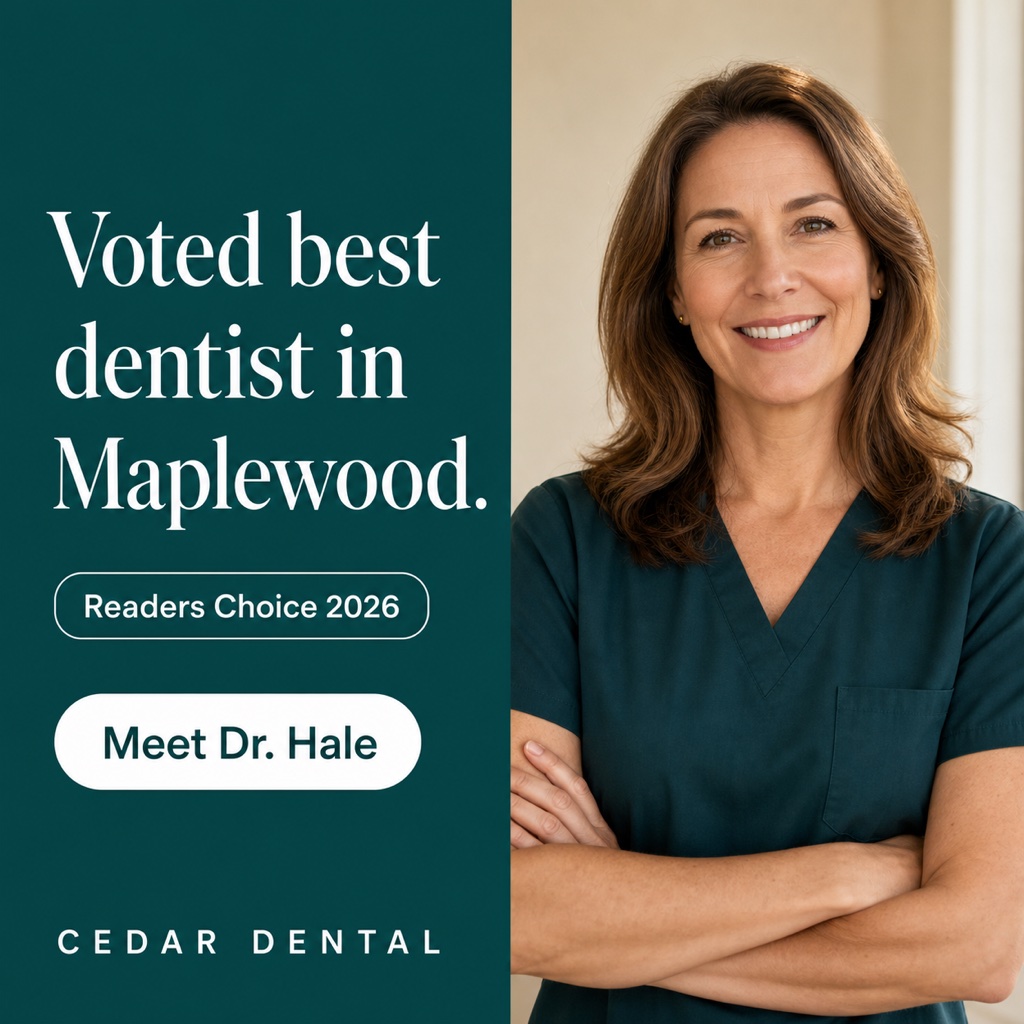
5. One proof point, the whole canvas
One Roanoke practice we scraped stacks eight award badges, three team photos, and a phone number into a single image. Tend's cards make the opposite bet: serif headline, one claim, one pill button. Pick your strongest proof and give it the whole frame. The other seven awards can live on your website.
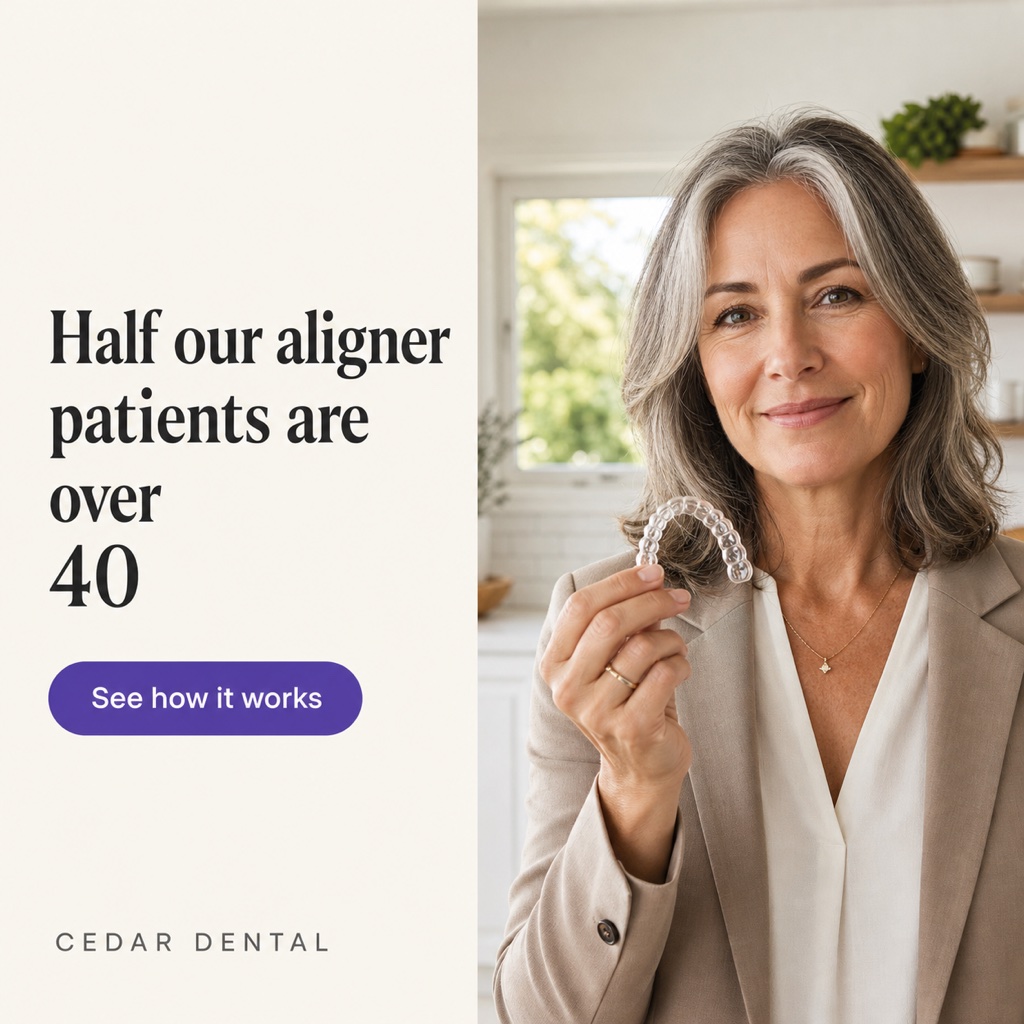
6. Adult aligners, framed on your patients
Aligner creative in the Ad Library skews to twenty-something stock models. The one adult-targeted ad we found opens with "You're not too old for straight teeth," which points at the viewer's age, exactly what Meta's personal-attributes rule punishes. Make the same claim about your patients instead: half our aligner patients are over 40.
The weekly optimization scorecard
Export results by campaign, concept, and treatment, then pair them with appointment data. The minimum scorecard: spend, leads, valid contacts, booked, attended, accepted, expected gross profit.
If CPL rises while cost per attended appointment falls, the campaign got better. If CPL falls but nobody picks up, it got worse. Feed that back into creative: name the city, clarify the treatment, drop offers that attract the wrong person.
Frequently asked questions
Do Facebook ads work for dentists?
Yes, mostly for elective treatments you can show and for local awareness. Facebook creates demand; Google Search captures it.
How much should a dentist spend to start?
Enough to read the whole funnel. At the $76.71 benchmark, $20 a day buys roughly eight leads a month, too few to judge an implant campaign. Work backward from the attended consults you need.
Can a dentist use patient photos in Facebook ads?
Sometimes, never by default. Covered practices need written authorization for marketing uses of PHI, and a photo being public does not count as consent. Document it before publishing.
Should dental ads use instant forms or a landing page?
Instant forms when the offer is simple and follow-up is fast. A landing page when the treatment needs education. Compare them on cost per attended appointment, not form completions.
Turn research into the next creative test
Find patterns across active dental ads, save the strongest mechanisms to a swipe file, and build original versions for your practice.
Make your next ad from what already runs
Research what competitors are running, then generate your own on-brand ads in minutes.